Sugarcane feeds many businesses. The picture below follows it from the field to the people who buy the end products.
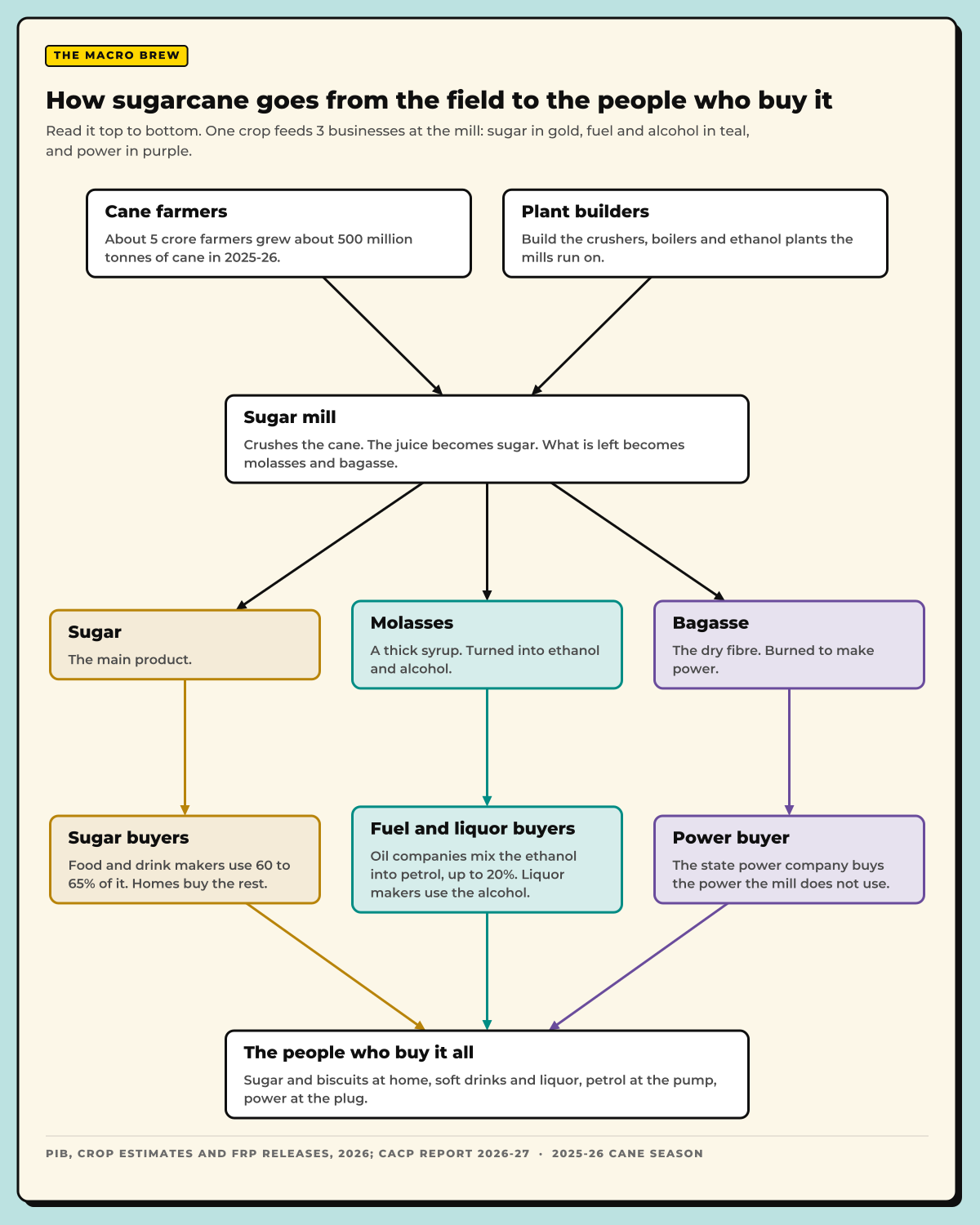
India grew about 500 million tonnes of cane in 2025-26. About 5 crore farmers grow it. A mill crushes the cane and makes sugar. What is left over becomes molasses, a thick syrup that is turned into ethanol for petrol and alcohol for liquor. The dry fibre, called bagasse, is burned to make power.
This piece maps that chain from the field to the final buyer. At each step it names the main companies, the cost that weighs most on them, and how much of each ₹100 of sales they keep as profit. Then it adds up who earns the most in rupees.
Who pays, and what drives demand
Businesses buy most of India's sugar. Factories and other businesses use about 60 to 65% of it, mostly for biscuits, sweets and soft drinks. Homes buy the rest.
Demand for sugar changes little from year to year. India eats 280 to 290 lakh tonnes a year and makes 300 to 340 lakh tonnes in a normal year, so the size of the crop is what moves the price. Over the 2 years to July 2026 the shop price rose only about 3% a year. Some big buyers are cutting back. About 73% of what Varun Beverages sells, the bottler of PepsiCo's drinks, is now low sugar or no sugar.
The government sets the demand for ethanol. It decides how much ethanol goes into petrol, and India has reached 20%. The state-run oil companies buy all of it. For 2025-26 they ordered 1,127 crore litres, worth over ₹75,000 crore. Not all of it comes from cane: grain now makes nearly three-fourths of India's ethanol.
Liquor makers buy the alcohol, and the states take most of the liquor price as excise. The state power company buys the power.
The chain in one picture
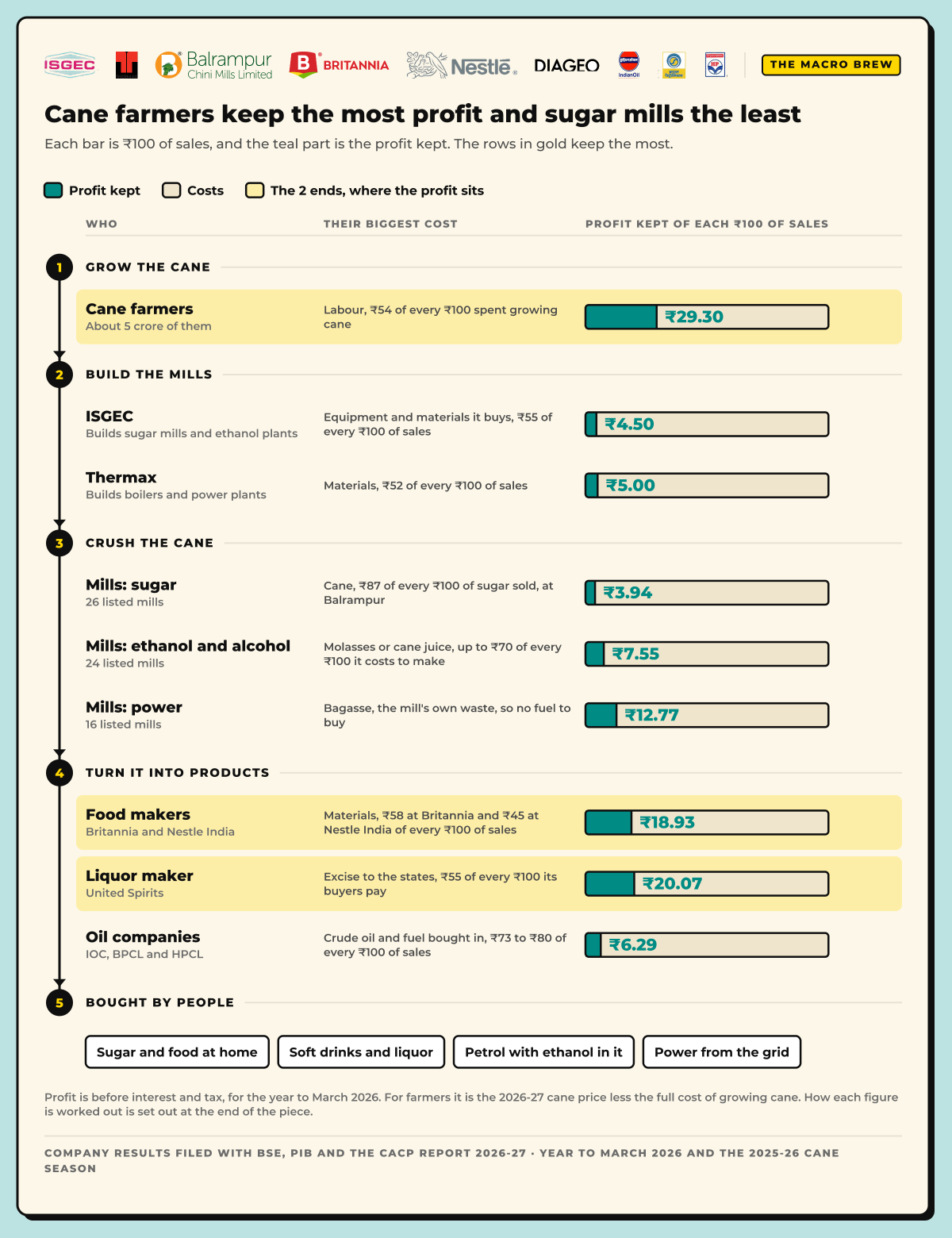
Read from top to bottom, the profit sits at the 2 ends, marked in gold. Farmers keep the most of each rupee they earn. The liquor and food companies that buy from the mills come next. The mills in the middle keep the least. On sugar, their biggest product, 26 listed mills kept only ₹3.94 of every ₹100 of sales in the year to March 2026.
The cost column shows why. A mill's biggest cost is cane, and the government fixes the price of cane. The food makers' biggest cost is spread over many inputs, and the liquor maker's is a tax its buyers pay.
How each figure is worked out is set out at the end.
The profit pool in rupees
Profit per ₹100 shows who keeps the biggest share of each sale. It does not show who makes the most money in total: a small share of a very big business can still be a lot of money. So this section adds up the profit at each step in ₹ crore.
Cane farmers make about 7 times what mills make on sugar
Profit in ₹ crore for one year, by who earns it. Farmers make about ₹33,000 crore; all mills together make about ₹4,400 crore on sugar.

PIB, CACP report 2026-27 and company results filed with BSE · 2025-26 season and the year to March 2026
Farmers make the most by far. Mills owed them ₹1,12,740 crore for the 2025-26 cane. If farmers keep ₹29.30 of every ₹100, as above, they made about ₹33,000 crore between them. This mixes 2 seasons: the share comes from the 2026-27 cane price, and the bill from 2025-26. Either way, that money is spread thin. Across 5 crore farmers it comes to about ₹6,600 each a year. The government sometimes counts farmers' families in that 5 crore, so the true figure for each farming family may be higher.
Mills make far less on sugar. The 26 listed mills sold ₹42,258.5 crore of sugar, about 38% of what India eats, by value. If every mill in India earned what they did, all mills together made about ₹4,400 crore on sugar. Farmers made about 7 times as much.
The states take a large cut too, as tax rather than profit. 4 listed liquor makers paid ₹38,776 crore in excise in the year to March 2026, and United Spirits alone paid ₹15,333 crore. Much of that liquor is made from grain, not cane. Mills got one break from the state: the tax on molasses was cut from 28% to 5%.
Counted either way, per ₹100 of sales or in total rupees, the farmer comes out far ahead of the mill.
Why the profit sits where it does
Each step keeps what its bargaining power lets it keep.
- Farmers are protected by law. The government sets the lowest price a mill must pay for cane, the FRP. For 2026-27 it is ₹365 a quintal, 2.81% more than last year. Some states make their mills pay more: Uttar Pradesh pays ₹400 a quintal for early cane and ₹390 for the rest. Mills must also pay on time. By 20 August they had paid 97% of the 2025-26 cane bill.
- Mills are squeezed from both sides. The price they pay for cane rises almost every year. The lowest price they may sell sugar for has been ₹31 a kilo and unchanged since 2019. The government also decides how much sugar each mill may sell every month, and whether it may export. When the price rose this summer, it stopped exports and the [[ex-mill price]] then fell about 28% from its August high.
- Ethanol makers sell to 1 buyer at a fixed price. The oil companies set a price for each raw material. In 2025-26 they paid ₹71.86 a litre for ethanol from maize, ₹65.61 for ethanol from cane juice and ₹57.97 to ₹60.73 for ethanol from molasses. The cane prices have not gone up for 3 years.
- Power has 1 buyer too. Mills sell their spare power to the state power company. Dhampur Sugar names this "single off taker" as a risk. Balrampur sold its power at ₹4.54 a unit.
- Food and liquor makers have brands. They can raise prices across many products, buy ahead or use less sugar. Britannia said "our ability to buy and hedge and manage the forward is better" than smaller rivals. Liquor makers gain from spare alcohol. Radico Khaitan said "most of the states are becoming ENA surplus", which means ENA is cheap.
Opening the rest…
Free account
Sign up for free to keep reading
A 6-digit code by email, no password. You also get the newsletter.
Already signed up? Use the same email to sign in.
Step 2 of 2
Check your email
Enter the 6-digit code sent to .
·