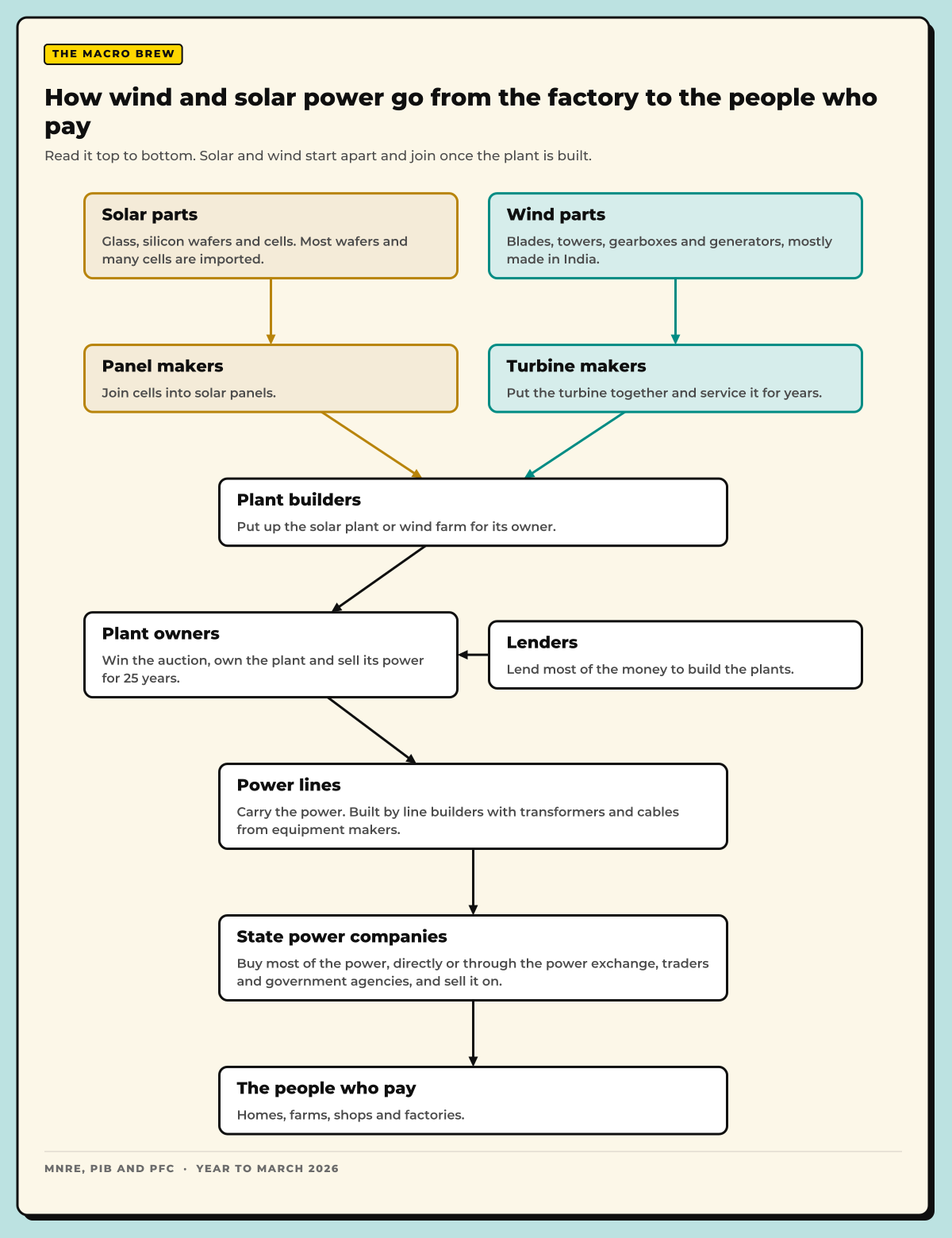
Wind and solar power pass through many businesses before they reach a plug. The picture below follows them from the factory to the people who pay the bill.
India had 171 GW of solar and 59 GW of wind at the end of September 2026. In the year to March 2026 it added about 45 GW of solar. Solar plants made 174.76 billion units of power that year and wind farms 106.70 billion units.
The solar and wind branches start apart. A solar plant is built from panels, and a panel from cells, which are cut from silicon wafers. A wind farm is built from turbines, each made of blades, a tower, a gearbox and a generator. From the building of the plant onwards, both branches share the same chain: the builders, the owners, the lenders, the power lines and the buyers.
This piece maps that chain. At each step it names the main listed companies, the cost that weighs most on them, and how much of each ₹100 of sales they keep as profit. Then it adds up who earns the most in rupees, and who earns the most on the money put in.
Who pays, and what drives demand
State power companies buy most of the power. They pay for it out of what homes, farms and businesses pay them. Power bought takes ₹75.76 of every ₹100 they spend. Together they made their first profit in the year to March 2025, ₹2,701 crore. The ones the states own still lost ₹9,437 crore.
The law sets demand for green power. Each state power company must buy a set share of its power from clean sources. That share is 33.01% for 2025-26 and 35.95% for 2026-27.
Demand for power itself was flat in the year to March 2026. India used only 0.80% more power than a year earlier. Then it jumped: India set a record peak of 270.8 GW in May 2026.
What buyers want is changing. Solar makes power only by day, and the evening peak needs power after sunset. Solar with 4 hours of battery storage was sold at ₹2.86 a unit in a 2025-26 auction. Wind sold at ₹3.67 to ₹3.69. Power promised at the evening peak sold for ₹6.27.
The chain in one picture
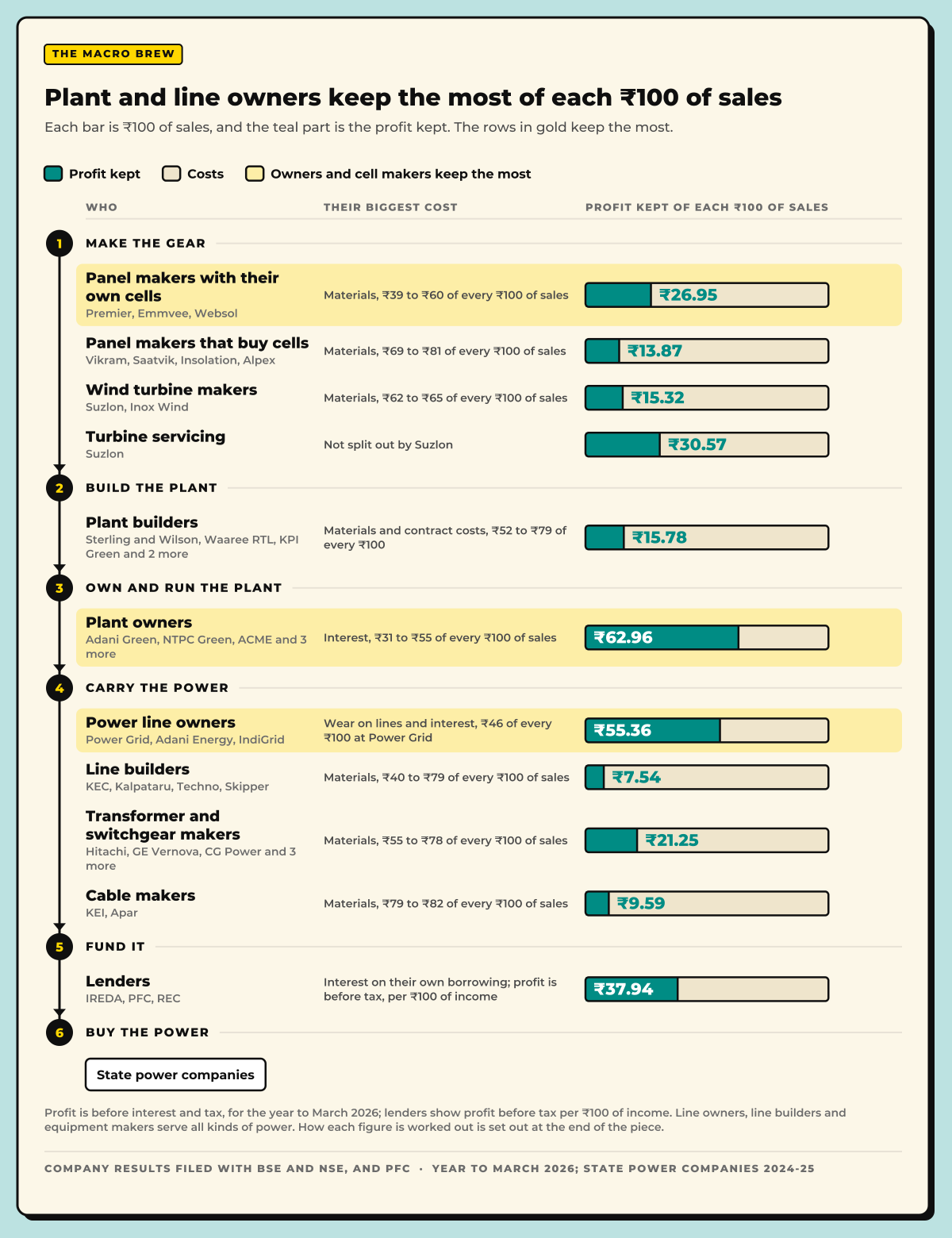
Read from top to bottom, the most profit per ₹100 sits with the companies that own things: the plants and the power lines. Plant owners kept ₹62.96 of every ₹100, and the line owners ₹55.36.
The makers and builders keep much less. Among panel makers, those that make their own cells kept ₹26.95, about twice what those that buy their cells kept, ₹13.87. The companies that build power lines kept only ₹7.54.
The cost column explains part of this. Makers and builders spend most of each rupee on materials. Owners spend little on materials, since sun and wind are free, but they borrow heavily to build, so their biggest costs are interest and the wear on their plant.
How each figure is worked out is set out at the end.
The profit pool in rupees
Profit per ₹100 shows who keeps the biggest share of each sale. It does not show who makes the most money in total. So this section adds up the profit at each step in ₹ crore.
Plant owners and line owners make the most profit in rupees
Profit before interest and tax in ₹ crore for one year, by step. Line owners and equipment makers also serve coal and hydro plants.

Company results filed with BSE and NSE · Year to March 2026
Among the businesses that work only on wind and solar, the plant owners made the most, about ₹15,552 crore before interest and tax. Adani Green alone made ₹8,285 crore. The panel and cell makers came next, with ₹13,677 crore. Waaree and Adani's factories made more than half of that.
Much of the owners' profit goes to lenders, though. Interest took ₹53.06 of every ₹100 of Adani Green's sales and ₹55.50 of ACME Solar's.
The power line owners made the most of anyone, ₹32,026 crore, and Power Grid alone ₹26,353 crore. But lines carry power from coal and hydro plants too, and no company says how much of its work is for wind and solar. So the chart keeps them apart, along with the grid equipment makers and line builders.
The lenders are the other big winner. 3 government-owned lenders, IREDA, PFC and REC, made ₹47,825 crore before tax. Wind and solar are only part of their lending: 40.8% of IREDA's loans, 15.5% of PFC's and 13% of REC's.
At the end of the chain, the buyer: the state power companies the states own lost ₹9,437 crore in the year to March 2025, the latest year with figures.
Opening the rest…
Free account
Sign up for free to keep reading
A 6-digit code by email, no password. You also get the newsletter.
Already signed up? Use the same email to sign in.
Step 2 of 2
Check your email
Enter the 6-digit code sent to .
·