of ARCIL's bad-loan receipts since 2002 that have been paid back
Four questions to ask of ARCIL after its 20x IPO
ARCIL's ₹733 crore IPO was subscribed 20.1x, with QIBs at 52.6x. But it isn't getting any of the money. It's a pure OFS by Avenue (69.7%), SBI (20.0%), Lathe Investment (5.0%, exiting fully) and Federal Bank. Currently, ARCIL is valued at 12.8x FY26 PAT of ₹352 crore and ~1.5x equity.
An ARC essentially buys bad loans cheaply and tries to recover more than it paid. Hence, the first number to watch is recovery. ARCIL has issued ₹44,114 crore of security receipts (SRs) since 2002, but only 50.8% has been redeemed, down from 51.3% in FY24. Across the industry, 27 ARCs had bought ₹16.19 lakh crore of loans by March 2025 against SRs of just ₹3.21 lakh crore, with ₹1.53 lakh crore still outstanding.
Then look at how old the bad loans are. 34.9% of ARCIL's AUM is more than eight years old, down from 47.9% in FY24. After eight years, ratings disappear, fees stop and RBI treats the asset as a loss asset. ARCIL's newer book is ~61% corporate and 33% retail, and corporate recoveries can take 5-6 years versus 2.5-4 years for retail.
The book looks reasonably secured, with 88% secured and 87.6% of rated AUM sitting in the top three ratings, but collateral only matters if it can actually be turned into cash.
And this is where ARC profits get tricky. In FY26, 30.5% of revenue came from management fees, 25.4% from recovery upside and 25.9% from fair-value gains on SRs. Unrealised gains alone were 1.05% of average AUM, against PAT of 1.90%. So reported profit isn't necessarily cash in the bank. ARCIL's RoA swung from -3.7% in FY21 to 11.7% in FY25.
Finally, look at how much of its own money ARCIL is putting into these deals. In a cash deal, the ARC pays the bank upfront to buy a bad loan. Cash deals made up 65% of industry acquisitions in FY25, up from 40% in FY22. ARCIL owns 21.9% of its AUM, but only 7.9% comes from cash deals. D/E has risen to 0.39x, but capital remains comfortable, with ₹2,577 crore of net owned funds and 65.3% capital adequacy versus the 15% minimum.
The questions while analysing an ARC could be: how much is actually being recovered? How old is the book? How much of the profit is cash? And how much of its own money is ARCIL putting behind the bet?
ARCIL’s return on assets went from −3.7% to 11.7% in 4 years
An ARC’s profit swings with what it recovers and how it marks what it has not. ARCIL’s ₹733 crore IPO, subscribed 20.1x, raised nothing for the company: it was all an offer for sale.
RETURN ON ASSETS, %
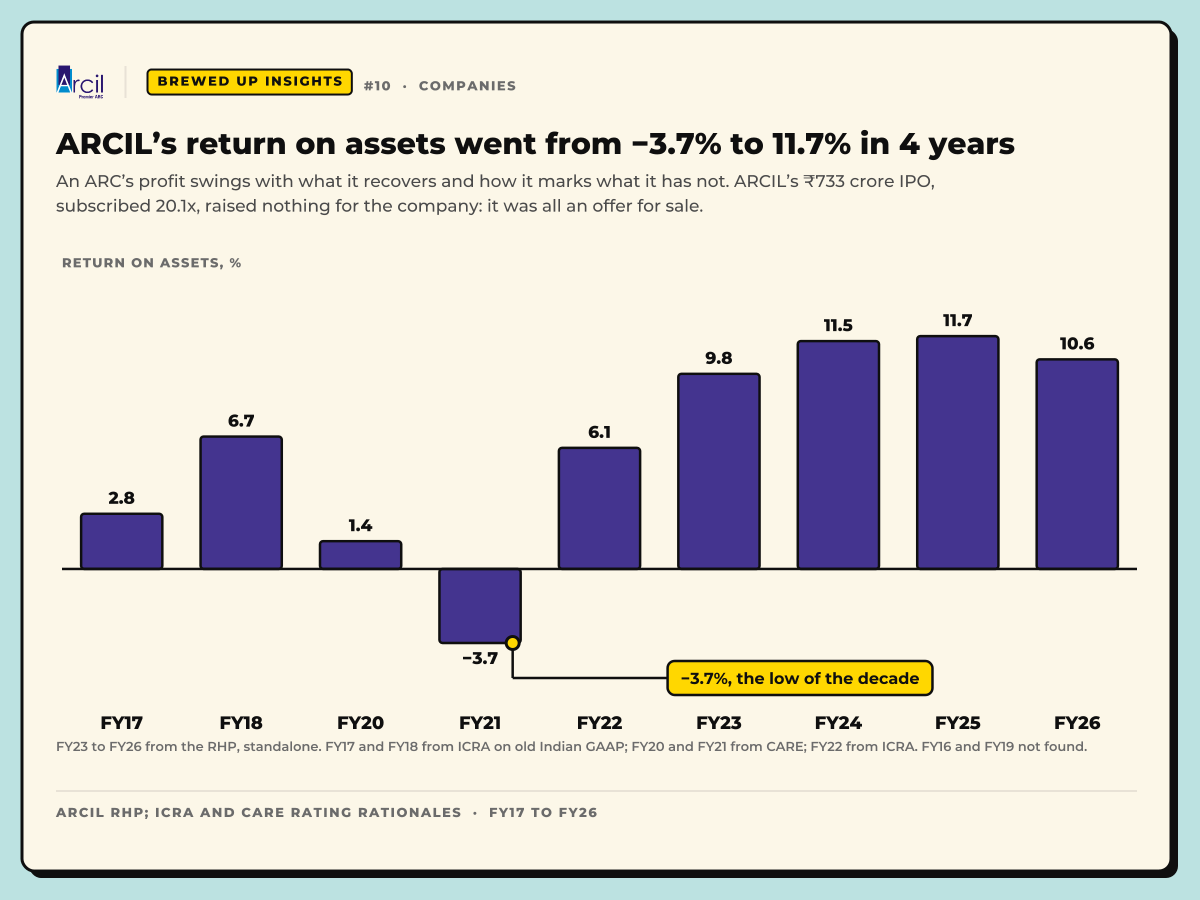
−3.7%, the low of the decade
FY23 to FY26 from the RHP, standalone. FY17 and FY18 from ICRA on old Indian GAAP; FY20 and FY21 from CARE; FY22 from ICRA. FY16 and FY19 not found.
ARCIL RHP; ICRA and CARE rating rationales · FY17 to FY26
A quarter of ARCIL’s FY26 revenue was fair-value gains, not cash
Revenue of ₹753 crore, by where it came from. Unrealised gains were 1.05% of average AUM, against profit after tax of 1.90%.
₹ CRORE, FY26
- Fair-value gains on SRs, unrealised195 25.9%
- Management fees230 30.5%
- Upside income on SRs191 25.4%
- Write-backs66 8.8%
- Recovery fees and other71 9.4%
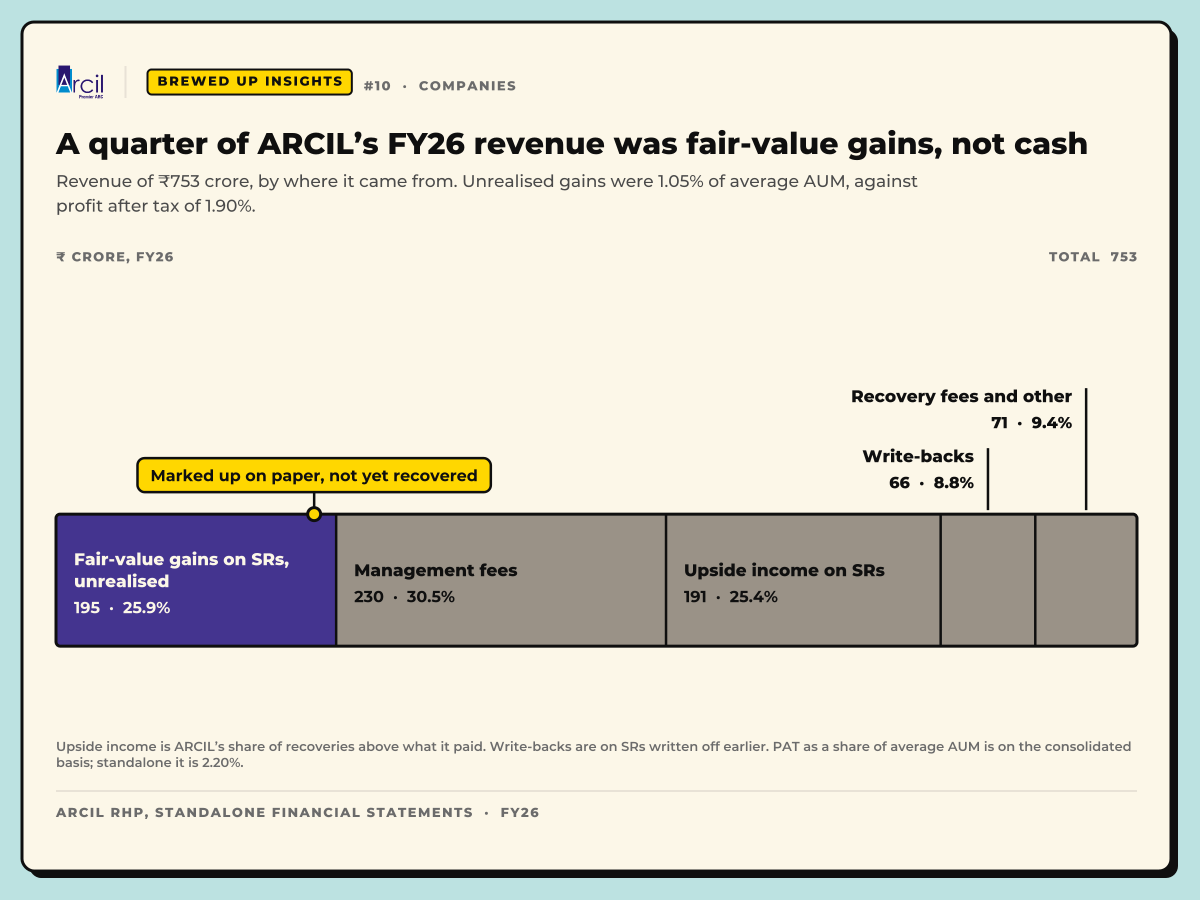
Marked up on paper, not yet recovered
Upside income is ARCIL’s share of recoveries above what it paid. Write-backs are on SRs written off earlier. PAT as a share of average AUM is on the consolidated basis; standalone it is 2.20%.
ARCIL RHP, standalone financial statements · FY26
4 questions to ask of an ARC, answered for ARCIL
An ARC buys bad loans cheaply and tries to recover more than it paid. After 8 years, ratings go, fees stop and the RBI treats what is left as a loss.

ARCIL RHP; CRISIL report in the RHP · FY24 to FY26