NSE expiring index options traded a minute, before and in the auction
SEBI changes expiry-day settlement under its new closing auction
On 15 October 2026, SEBI changed its new closing auction. From 7 December, index options and stock futures expiring that day will settle using the volume-weighted average price (VWAP) of the last 30 minutes of normal trading, instead of the auction's closing price.
The closing auction began on 3 August. It stops normal trading at 3:15 pm and matches orders at a single closing price. Initially, this price was also used to settle derivatives expiring that day. But SEBI found that options trading became more concentrated around the auction, rather than less.
In the NSE's 26 expiries before the auction and 5 after it, the value of expiring index options traded per minute rose from ₹126 crore in the last half-hour of normal trading to ₹190 crore during the auction. On BSE, it doubled from ₹141 crore to ₹289 crore. Traders were pricing options using the auction's indicative price before actual trades had established the final price.
The auction itself stays, but the timings change. Normal trading will run until 3:30 pm, followed by a 10-minute auction that starts with a 1-minute pause and ends at 3:40 pm. Index derivatives will trade until 3:45 pm, except contracts expiring that day, which stop at 3:30 pm. From 8 February 2027, large orders split into smaller visible pieces, called iceberg orders, will also enter the auction unless traders opt out.
For options traders, expiry-day settlement returns to the old method. For index fund investors, the auction's closing price will still determine the value of their holdings at the end of the day. SEBI calls the change to expiry settlement interim and will review it after at least a year.
SEBI's closing auction now starts at 3:30 pm and runs 10 minutes
The last minutes of the trading day on NSE and BSE, before and after SEBI's change. Normal trading gets 15 minutes back and the auction session shrinks from 20 minutes to 10.

Normal tradingPauseClosing auctionExpiring contracts stop
The auction closes at random in its last 2 minutes. Since 3 August, orders are taken to 3:30 pm and matched by 3:35 pm. From 7 December 2026, other index and stock derivatives trade to 3:45 pm.
SEBI circulars of 16 January 2026 and 15 October 2026 · From 3 Aug 2026 and from 7 Dec 2026
SEBI trimmed its closing auction 2 months after launch
From the circular that created the auction to the one that took expiry days out of it.

SEBI circulars, consultation paper and press release · Jan 2026 to Oct 2026
NSE and BSE expiry-day option trading sped up in the auction
Value of expiring index options traded a minute on expiry days, before and after the closing auction began. The day got quieter overall; the auction minutes got busier.
₹ CRORE A MINUTE, EXPIRY DAYS
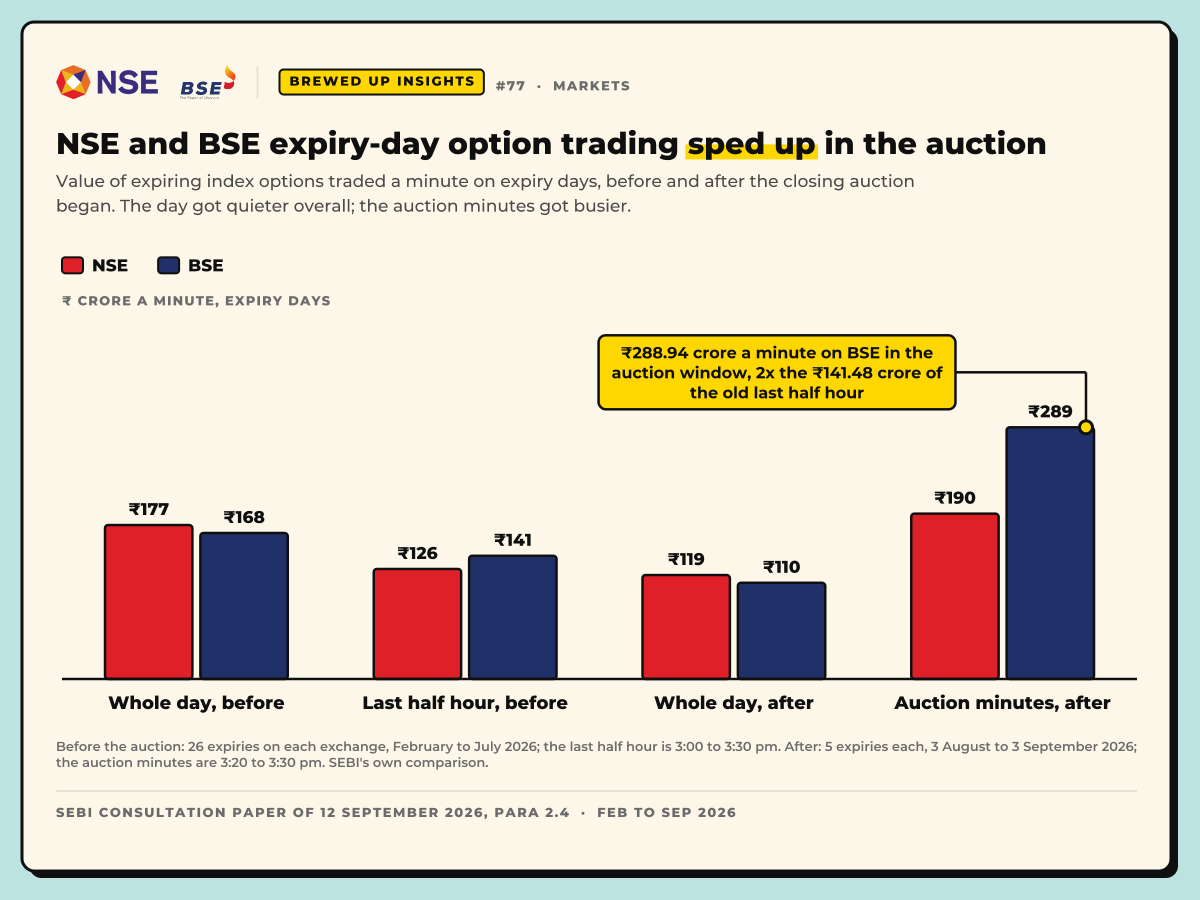
₹288.94 crore a minute on BSE in the auction window, 2x the ₹141.48 crore of the old last half hour
Before the auction: 26 expiries on each exchange, February to July 2026; the last half hour is 3:00 to 3:30 pm. After: 5 expiries each, 3 August to 3 September 2026; the auction minutes are 3:20 to 3:30 pm. SEBI's own comparison.
SEBI consultation paper of 12 September 2026, para 2.4 · Feb to Sep 2026
Sources
- SEBI circular of 15 October 2026, Review of certain aspects of the Closing Auction Session, market timings and settlement methodology for derivatives contracts (PDF)
- SEBI circular of 16 January 2026, Introduction of Closing Auction Session (CAS) in the Equity Cash Segment and certain modifications in the Pre-Open Auction Session (PDF)
- SEBI consultation paper of 12 September 2026, Review of Certain Aspects of the Closing Auction Session, Market Timings and Settlement Methodology for Derivatives Contracts (PDF)
- SEBI press release 53/2026 of 3 September 2026, SEBI to review Settlement Price methodology for Derivative Contracts in the light of CAS rollout (PDF)
- NSE circular NSE/CMTR/73362 of 18 March 2026, Operational guidelines and Standard Operating Procedure on the Closing Auction Session (PDF)